Reading the Shop Window: How Grenada's Pharmacists and Shopkeepers Signal Trouble Before the Alerts Do
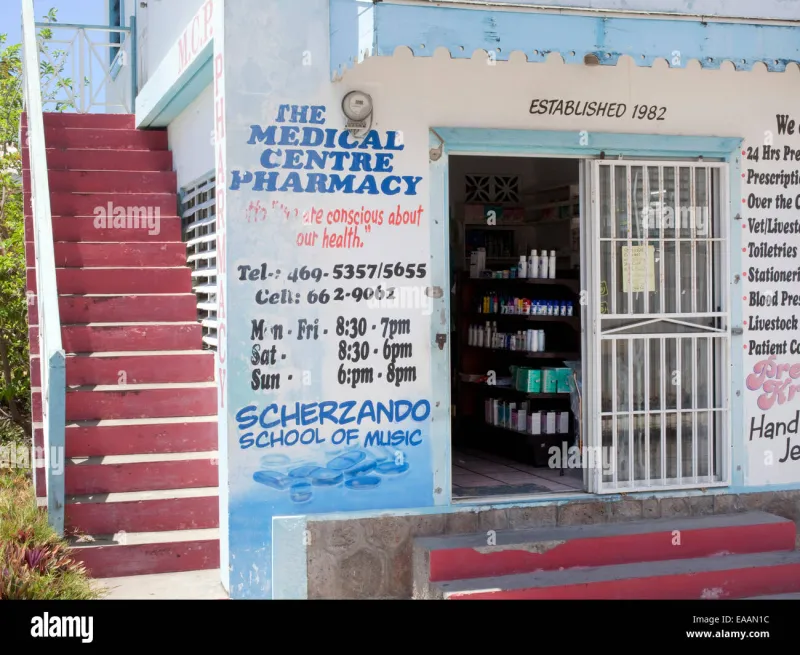
Photo: small Caribbean pharmacy storefront with shelves of supplies, Grenada street scene, via c8.alamy.com
On a Tuesday morning in early September, a visitor to a pharmacy on Granby Street might notice something subtle: the water shelf is half empty, the cashier is taping a handwritten sign about adjusted hours, and the pharmacist is on the phone for the third time in an hour. No sirens. No push notification. But in Grenada, that scene often means more than any alert.
For American travelers accustomed to receiving crisis information through official channels — the National Weather Service, an airline text, a hotel memo — Grenada operates differently. News of a brewing tropical wave, an uptick in dengue cases, or an impending fuel delivery delay frequently travels through shopkeepers, pharmacists, and taxi drivers days before it appears on a government social media feed. Understanding this informal network is not a novelty; for a traveler, it can be the difference between a smooth departure and a scramble.
Why the Corner Drugstore Hears It First
Pharmacists occupy a unique position in Grenadian communities. They are trusted, centrally located, and visited by nearly everyone — mothers with sick children, elderly residents refilling prescriptions, workers picking up remedies after a weekend of heavy rain. When a pattern emerges, whether it is a cluster of mosquito-borne fevers or customers suddenly asking about water purification tablets, the pharmacist sees it before the Ministry of Health publishes a notice.
The same logic applies to storms. A pharmacist who lived through Hurricane Ivan in 2004 does not wait for a named system to appear on satellite imagery to start thinking about inventory. When a depression forms east of the Windwards, orders shift, shelves get restocked deliberately, and hours may quietly change. Those adjustments are visible to anyone paying attention.
The Signals Worth Noticing
You do not need to speak with anyone to pick up useful information. Watch for these patterns during your stay:
- Inventory shifts. Canned goods, batteries, candles, and bottled water moving to prominent displays in small shops — especially outside the typical tourist season — suggest anticipated disruption.
- Price or rationing changes. If a shop begins limiting the quantity of a staple per customer, locals likely know something you do not.
- Altered hours. Handwritten notices about early closing or Sunday openings are rarely random in a small commercial district.
- Conversation topics. In a pharmacy waiting area or at a shop counter, the concerns being discussed — a cough that is "going around," a boat that did not arrive, the price of cooking gas — are the community's real-time dashboard.
- Behavior around water and fuel. Lines at gas stations or clusters of residents filling containers are among the most reliable early indicators of an approaching weather event.
What to Ask, and How to Ask It
Grenadians are generally forthcoming with visitors, but generic questions produce generic answers. Specificity works better. Rather than "Is everything okay?" try:
- "Has there been any illness going around lately that I should know about?"
- "How's the supply of drinking water been this week?"
- "When the weather turns, what do people here usually do first?"
- "Is there anything you'd stock up on if you were me?"
Frame questions as a request for local expertise rather than a request for reassurance. A pharmacist who is asked for practical advice will often tell you exactly what residents are buying and why — which is, in effect, a briefing.
Turning Informal Intelligence Into a Plan
Information only matters if it changes what you do. When you notice signals or receive a candid answer, take three steps:
- Cross-check with official sources. Treat shop-talk as a prompt, not a verdict. Confirm with the Grenada Meteorological Service, NADMA (the National Disaster Management Agency), and your government travel advisories before acting on rumors.
- Close your gaps early. If locals are buying water and batteries, buy yours the same day. Rental villas and guesthouses on the island vary widely in storm readiness, and supplies thin quickly.
- Confirm your exit logistics. Check flight status directly with your airline, verify ferry schedules if you plan to visit Carriacou or Petite Martinique, and know where your lodging's emergency procedures are posted.
A Disclaimer and a Discipline
Informal networks are fast but imperfect. Not every restocked shelf precedes a hurricane, and not every whispered concern is accurate. The discipline is in layering: use what the pharmacist knows as your early tripwire, verify through official channels, and prepare as though the informal signal is right.
The most experienced travelers to the Caribbean learn to watch the island, not just the forecast. In Grenada, that often means watching the shop window — and knowing when the quiet preparations of locals are telling you it is time to make your own.