Your First 72 Hours: The Room-by-Room Audit That Reveals Whether Your Grenada Lodging Can Survive a Storm
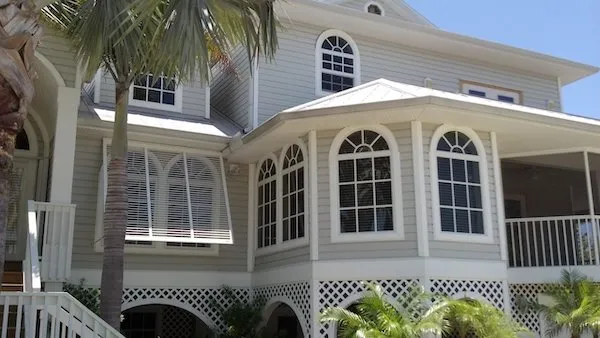
Photo: Caribbean guesthouse exterior with storm shutters tropical hillside, via eurexshutters.com
American travelers routinely ask one question when booking lodging in the Caribbean during hurricane season: Is this place storm-ready? The answer is almost always yes. It is also almost always meaningless.
The problem is not dishonesty. Most managers genuinely believe their property is prepared. But 'prepared' can mean anything from a full standby generator and a written evacuation plan to a closet containing two flashlights and a case of bottled water. Without a framework, a visitor has no way to tell the difference.
This audit provides that framework. It requires no expertise, no special equipment, and roughly two hours of casual attention spread across your first three days at any Grenada guesthouse, villa, or hotel. Complete it while the skies are still blue, and you will know exactly where you stand if a tropical wave forms near the Windwards.
Day One: Water, Power, and the Questions That Sound Rude
Your first evening is for the essentials, and it begins with a conversation at the front desk or with your host. Ask two questions directly: Where is drinking water stored, and what happens to the electricity if the grid goes down?
Grenada's municipal water supply depends on electric pumps. When outages occur, taps in upper-floor rooms frequently run dry before the storm arrives. A prepared property will show you cisterns, rooftop tanks, or stored drums — and Grenadian homes almost universally have some form of rainwater catchment. A vague answer here is your first warning sign.
Next, walk your room. Confirm the location of the circuit breaker or fuse panel, and ask whether the property has a generator. If it does, ask which outlets or rooms it powers. Many smaller properties run a generator only for the kitchen, the water pump, and a few common-area sockets — not guest rooms. Knowing this in advance lets you plan where to charge devices.
Finally, check the tap pressure and fill a spare bottle tonight. It costs you nothing and establishes a baseline: if pressure drops noticeably over the coming days, you will recognize the signal immediately.
Day Two: The Physical Walkthrough
Daylight reveals what the front desk does not. On your second day, take a slow, deliberate walk of the property with four things in mind.
Shutters and glass. Look at the windows in your room and in common areas. Are there storm shutters — aluminum panels, wooden boards on hooks, or impact glass? In Grenada, many older buildings rely on pre-cut boards stored in a shed. If you see none, ask where they are. A property with no window protection at all is not necessarily unsafe, but you should know which room to avoid when the wind rises.
Roofline and drainage. You are not inspecting for engineering defects; you are looking for obvious vulnerabilities. Missing roof tiles, gutters clogged with vegetation, or a low-lying entrance that would pond in heavy rain all matter. Grenada's June-through-November systems often deliver their worst damage through flooding, not wind.
Elevation and exposure. Note whether your room sits at ground level, on a hillside, or above a ravine. Grenada's mountainous terrain means flash runoff moves fast, and some coastal properties sit within sight of a storm surge line. If you are staying near the water on the island's north or east coast — areas like Sauteurs or Grenville that face the open Atlantic — ask the manager directly where guests shelter and at what point they would relocate.
The stairs and the exit. Count the ways out of the building. Every guest should be able to reach an exit in the dark. If your room has a single door and a window that does not open, that is worth knowing now.
Day Three: The Plan on Paper
By your third day, you should have seen the property's emergency plan in writing. If none exists, that absence is itself the finding.
A credible plan answers five questions:
- Where do guests shelter? An interior room, a concrete stairwell, or a designated strong room — named, not implied.
- What triggers action? At what alert level does the property move guests, board windows, or close?
- Who is in charge at 3 a.m.? A named person, with a phone number, not 'the manager.'
- How will they reach you? Knocking on doors, a WhatsApp group, a horn signal.
- Where is the nearest official shelter? Grenada's emergency shelter network is coordinated through the National Disaster Management Agency (NaDMA), and any established guesthouse on the island should be able to name the closest one.
Request the plan politely — travelers who ask reasonable safety questions are viewed as prudent, not difficult, throughout the Caribbean. Photograph it. Store the images offline.
Scoring Yourself Before the Sky Turns Gray
Convert what you have observed into a simple verdict. If the property stores water, has a named shelter location, protects or can protect its windows, and has a reachable human in charge overnight, you are in a defensible position. If two or more of those answers were vague, treat your accommodation as a fair-weather base only: identify an alternative — a larger hotel, a friend's home, a documented shelter — and know how you would get there.
This is not alarmism. Grenada's hospitality sector has weathered direct hits, including Hurricane Ivan in 2004, and the vast majority of properties take the season seriously. But Ivan is also precisely why the island's building codes, cisterns, and shuttered windows exist — and why the question deserves a better answer than a smile and a yes.
Seventy-two hours of attention buys you certainty. Do the audit before the cone appears, and if a storm does form, you will spend your time executing a plan rather than improvising one.