Type First, Talk Later: Why a Text Message May Save You Faster Than a 911 Call in Grenada

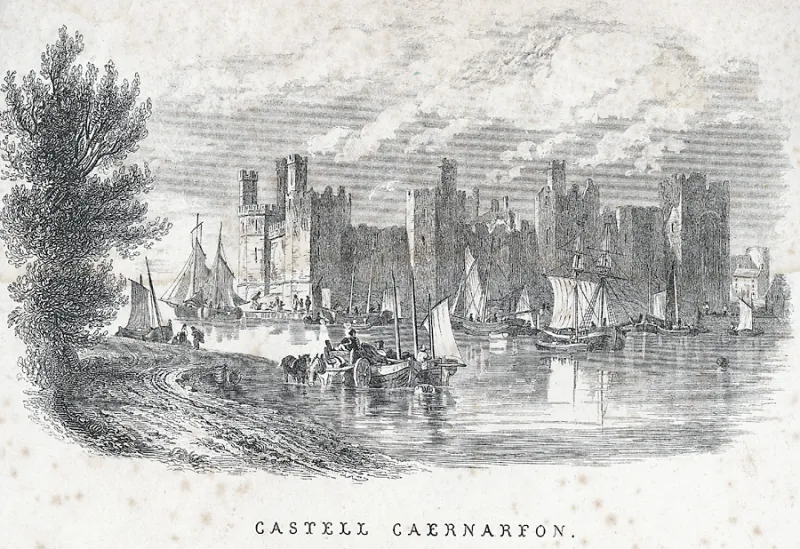
Photo: Dietmar Rabich, CC BY-SA 4.0, via Wikimedia Commons
There is a moment, familiar to anyone who has traveled through a Caribbean storm season, when the cell network starts to groan. The bars on your phone may look full, but every call you place rings once and dies. For American visitors in Grenada, this is often the moment panic sets in — and the moment the wrong instinct takes over.
That instinct is the phone call. It is almost always the wrong first move.
The Congestion Problem Nobody Warns You About
Voice networks are fragile by design. A single call occupies a dedicated channel from the moment it connects until it ends. When a storm approaches or an incident draws hundreds of worried visitors to their phones at once, those channels fill fast. The result is the familiar fast-busy signal or the endless ring that goes nowhere.
Text messages work differently. An SMS is a tiny packet of data that hops onto the network in spare moments, queues when the system is busy, and delivers when a slot opens. During Hurricane Ivan's aftermath in 2004 and in every significant disruption since, short-message traffic has consistently outperformed voice traffic. Your text may take a few minutes to arrive — but it arrives.
The US traveler is at a particular disadvantage here because our domestic habits run the other way. Back home, texting 911 exists in some jurisdictions but remains little-known and rarely used. Most Americans have never sent an emergency text in their lives. In Grenada, where the local emergency line at 911 serves police, fire, and medical needs and where network capacity is far smaller than anything in a US metro area, the calculus is entirely different.
A Text Carries What a Call Cannot
Consider what happens in a panicked voice call. The caller is breathing hard, the location is vague — "we're by the beach, near the big hotel, I think" — and the dispatcher is spending the first ninety seconds just extracting basic facts.
Now consider a text: "Two US citizens, injured ankle, Anchor's Beach parking area, St. George's, near the yellow dive shop. Can walk. Need transport." That message is complete, reviewable, and forwardable. The dispatcher can read it twice. It can be relayed to a second agency without repetition. In a crisis, that precision is worth more than the immediacy of a voice.
Texts also create a record. If the network drops before you receive a reply, your message remains in the queue. If you are traveling with others, you can forward the same message to your hotel, your tour operator, and family in the States simultaneously — something impossible with a single voice channel.
A Practical Texting Playbook for Grenada
Build the habit before you need it. Before departure, save these numbers in your phone with clear labels:
- Local emergency (police, fire, ambulance): 911
- Your accommodation's front desk or manager — ask for the direct mobile number at check-in, not just the main line
- Your airline or ferry operator's local contact
- The US Embassy in Barbados, which covers Grenada — note that email and online contact forms often function when phones do not
When composing an emergency text, follow a simple structure: who, what, where, condition, need. Two people. Medical issue. Specific location with a landmark. Current mobility. What you're asking for. Keep it under three sentences.
For family back home, agree on a check-in protocol before you travel. A single text — "Safe, at hotel, will update at 6pm" — reassures a dozen worried relatives and prevents a cascade of international calls that only add load to an already strained network. Designate one family member as the point of contact so information flows in one direction instead of five.
Text your hotel before you text anyone else for non-life-threatening problems. Front desk staff on the island know which roads are flooded, which clinic is open, and which ferry is running. They are your fastest, most locally informed lifeline.
When You Should Absolutely Call
This is an argument for texting first, not texting only. A voice call is the right move when:
- The situation is immediately life-threatening and seconds matter — cardiac arrest, a drowning in progress, a serious collision. Call 911 directly.
- You need a two-way conversation — a dispatcher giving CPR instructions, for example, needs dialogue, not a monologue.
- Your text has gone unanswered for more than fifteen minutes and the matter is urgent. Escalate to a call, then try again by text if the call fails.
- You are reporting something in progress where the responder may need to ask clarifying questions in real time.
Change the Habit Before the Emergency
The travelers who navigate Grenada's disruptions most gracefully are rarely the ones with the best equipment or the best plans. They are the ones with the best habits. Text-first communication is a habit you can build on day one of your trip: confirm your hotel's number by text, send a short arrival message to family, and practice the who-what-where structure once.
When the network strains under a tropical wave at 2 a.m., you will not rise to the occasion. You will fall to your habits. Make sure yours involve a keyboard.