From Ambulance to Admission: What Really Happens When a Tourist Lands in a Grenada Emergency Room
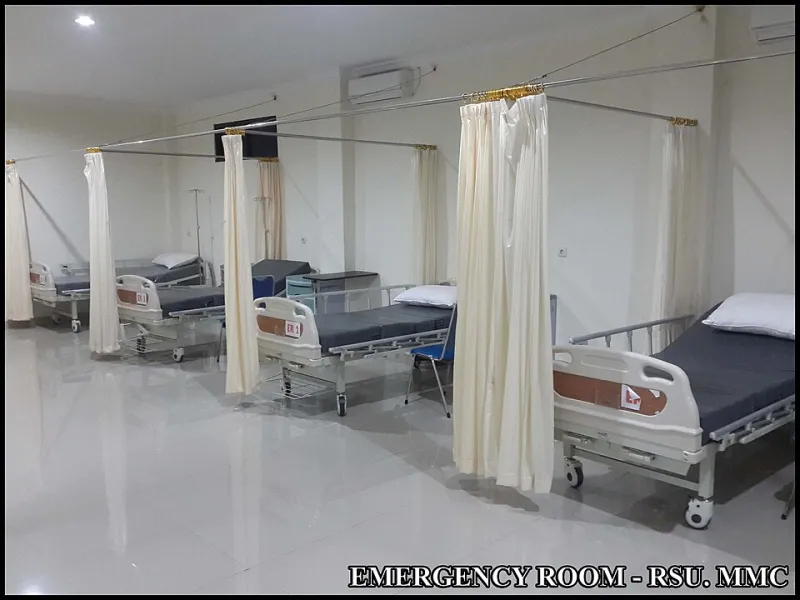
Photo: RSU. Manado Medical Center, CC BY-SA 4.0, via Wikimedia Commons
Most travelers assume the hard part is getting help. In reality, calling for an ambulance in Grenada is often the simplest step of the entire chain. What follows — triage, admission, payment, and possibly evacuation — is where American visitors routinely lose time, money, and peace of mind. This guide walks through that chain, link by link.
Two Systems, Two Very Different Experiences
Grenada operates a tiered medical landscape. The General Hospital in St. George's, along with district facilities like the Princess Alice Hospital in St. Andrew's and the St. David's facility in the island's south, form the public backbone. These institutions handle the overwhelming majority of emergencies, from road accidents on the L'Anse aux Épines road to diving incidents off the coast.
Private options, including St. George's University-affiliated clinics and smaller private practices, offer shorter waits and more familiar amenities — but they are not trauma centers. A private clinic can stabilize a patient and manage routine illness; it cannot perform complex surgery or provide intensive care at the level a US hospital would.
For American travelers, the practical rule is this: a sprained ankle or a bad sunburn can be handled comfortably in either system. A serious car accident, a cardiac event, or a severe diving injury will almost certainly route you through the public system first — and possibly off the island afterward.
The First Hour: Triage and Paperwork
Grenada's emergency rooms operate on triage principles familiar to anyone who has sat in a US waiting room, with one notable difference: capacity. During peak season — December through April — the General Hospital can run near capacity. During hurricane season, an influx of storm-related injuries can stretch resources quickly.
Expect to present a passport at registration. Expect to sign financial responsibility forms early in the process. Public facilities charge modest fees for tourists — typically a fraction of US emergency room costs — but payment or proof of insurance is requested before discharge, not after. Travelers should not interpret this as a demand for upfront cash in life-threatening situations; stabilization comes first. But you should be prepared for the administrative conversation within the first day.
What US Travel Insurance Actually Covers
Here is where many Americans get surprised. The health insurance card in your wallet — whether employer-sponsored, a marketplace plan, or Medicare — almost never provides meaningful coverage outside the United States. Medicare, in particular, pays nothing for routine care in Grenada.
Travel medical insurance, purchased separately, is the product that matters. Policies from providers such as GeoBlue, Allianz Travel, World Nomads, and Seven Corners generally fall into two tiers:
- Emergency medical coverage: Pays hospital and physician bills abroad, typically $50,000 to $500,000 in limits.
- Emergency evacuation coverage: Pays to move you to a facility capable of treating you — the benefit that matters most in Grenada.
Insurers we reviewed consistently emphasized the second tier. Grenada's hospitals can handle stabilization and common emergencies, but conditions requiring neurosurgery, advanced cardiac intervention, or specialized burn care exceed local capacity. In those cases, an air ambulance to Miami — a two-and-a-half-hour flight — is the standard of care. A medically equipped charter flight can cost between $25,000 and $60,000. Without evacuation coverage, that bill lands on the patient or their family.
A critical detail: most insurers require pre-authorization for evacuation. The treating physician must certify that local care is insufficient, and the insurer's medical team must approve the transfer. This process can take hours. Travelers who buy insurance after symptoms appear, or who fail to notify their insurer promptly, jeopardize their claims.
When Evacuation Becomes the Only Option
Not every serious case leaves the island. A fracture, a moderate infection, or a manageable cardiac event can often be treated locally. Evacuation decisions hinge on three factors: the availability of the required specialty locally, the patient's stability for flight, and weather.
That last factor deserves emphasis. During tropical storm activity, air ambulances may be grounded for days. This is the strongest argument for travelers arriving between June and November to carry a policy with evacuation coverage — and to understand that coverage guarantees payment, not a rescue flight through a hurricane.
Commercial escort options — where a stable patient flies on a scheduled flight with a medical escort — cost dramatically less than a charter and are worth asking your insurer about.
A Pre-Departure Checklist
Before you board your flight to Maurice Bishop International Airport, complete the following:
- Check your policy's evacuation benefit. $100,000 is a reasonable minimum; $250,000 is better.
- Save the insurer's 24-hour assistance line in your phone and on a paper card. International collect-call numbers matter when local SIMs fail.
- Photograph your passport, insurance card, and prescription list. Store copies offline.
- Know the local numbers. Ambulance and fire services in Grenada can be reached by dialing 911; keep the Grenada Emergency Hub directory saved offline as well.
- Ask your insurer three questions: Does this policy pay hospitals directly, or do I pay and seek reimbursement? Is pre-authorization required for evacuation? Does it cover pre-existing conditions?
- If you take critical medication, carry double — in original, labeled containers — since pharmacy resupply abroad is not guaranteed.
The Bottom Line
Grenada's medical system is competent, humane, and smaller than the one you left at home. For most travelers, nothing more will ever be needed. But the traveler who arrives with real evacuation coverage, documented medical history, and a clear understanding of how the system works is the traveler who spends a crisis being treated rather than negotiating. Ten minutes of preparation before takeoff is the cheapest insurance you will ever buy.